



Monthly Highlights
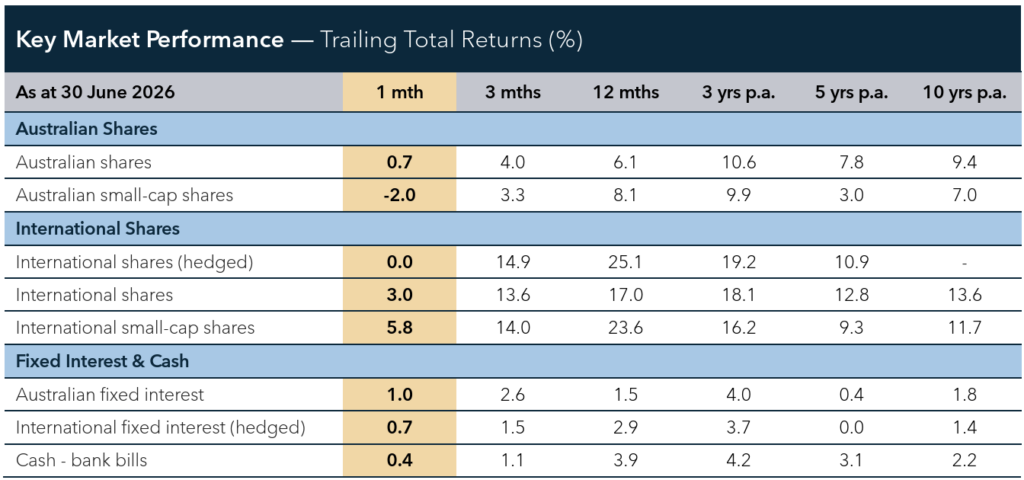
Global share markets consolidated in June, with the US-Iran peace agreement helping to reduce geopolitical uncertainty but failing to spark a meaningful equity rally. Markets had already looked through much of the conflict, aside from its drag on energy stocks. US shares softened as investors took profits from technology names after a strong run, while property and infrastructure enjoyed a steadier month as interest-rate sensitive assets found firmer footing.
Australian shares edged higher over the month, with healthcare, consumer staples and consumer discretionary stocks doing much of the heavy lifting. This helped offset a sharp fall in energy, as easing oil prices took some heat out of the sector. Materials were also weaker as commodity prices softened, while smaller companies lagged larger peers, suggesting the market advance remained relatively narrow rather than broad-based.
June exposed a wider split across international markets, with Europe setting the pace while the US lost momentum. The pullback in US technology stocks looked more like a pause after a powerful run than a broader retreat from risk. Japan also finished in positive territory, while China remained under pressure, reflecting ongoing caution toward its growth outlook. A weaker Australian dollar helped cushion offshore returns for unhedged investments.
Australian and global fixed interest markets delivered positive returns, with Australian bonds benefiting as local yields moved lower. The fall in domestic yields supported bond prices, while global bonds also produced a modest gain despite US yields edging higher. Credit markets remained calm, with tight spreads suggesting investors remain comfortable with corporate fundamentals despite lingering uncertainty around inflation, growth and policy settings.
Market Observations and Outlook
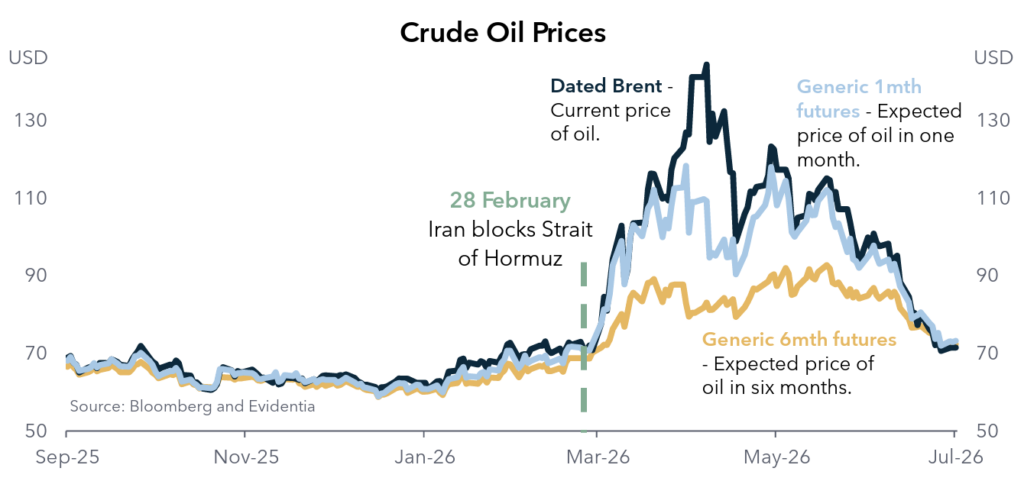
The geopolitical backdrop has improved following the peace agreement between the US and Iran, easing immediate concerns around a broader regional conflict. Oil prices have since fallen, reducing the risk that higher energy costs flow through to inflation. While this is encouraging for central banks and financial markets, it is too early to say the risk has passed. Oil prices may remain volatile while the ceasefire is tested, and uncertainty persists around shipping routes and regional energy infrastructure.
In the US, new Federal Reserve Chair Kevin Warsh has begun with a clear message: inflation remains the priority. His first meeting marked a noticeable change in tone, with the Fed removing its bias towards lower rates and putting price stability back at the centre of the policy debate. Markets have interpreted this as a firmer stance on inflation, with investors now expecting a modest increase in US interest rates over the next two years.
This has contributed to a flatter yield curve, where the gap between short and long-term interest rates has narrowed, and reinforced investor focus on earnings quality and valuation discipline. For now, US shares continue to be supported by strong earnings, healthy margins, solid employment and resilient spending, although sticky inflation and slower earnings growth remain key risks.
In Australia, the RBA is facing a difficult balancing act. The economy is under pressure from elevated inflation, higher interest rates, weak productivity and a softer housing market. At the same time, the labour market remains tight, and household spending has been stronger than consumer confidence surveys suggest. While the RBA’s June pause has encouraged the view that rate increases are finished, inflation risks remain elevated. Another rate rise appears more likely than not, although the decision is finely balanced.
While US shares remain supported by earnings growth, Australian shares warrant greater caution given domestic demand and interest rate risks. Australian bonds continue to offer diversification benefits if growth slows, though valuations are less compelling than when yields were higher.
Overall, the current environment continues to reward selectivity. Strong earnings, sensible valuations and a clear understanding of central bank policy remain important when assessing risks and identifying the most compelling opportunities.