




What has happened in markets?
Over the weekend, the United States, alongside Israel, carried out significant military strikes against Iran. The operation reportedly killed Iran’s Supreme Leader Ayatollah Ali Khamenei and targeted key military and nuclear facilities. Iran has since launched retaliatory strikes across the region, and tensions remain elevated. Despite the gravity of the developments, early trading suggests markets are responding in a measured way.
Oil prices jumped sharply, with Brent crude rising more than 10% at one stage as traders reacted to the risk of supply disruption. Gold also moved higher. However, as Asia opened on Monday, broader share market moves have been relatively contained.
In Australia, the ASX was only modestly lower on Monday morning, easing slightly from record highs. Most sectors traded softer, while oil-exposed companies and gold miners were stronger in line with commodity moves. Importantly, the pullback has been orderly rather than disorderly.
What comes next?
For markets, the central question is whether this becomes a sustained disruption to global oil supply.
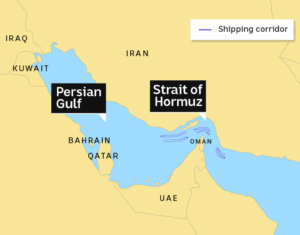
The Strait of Hormuz remains the key pressure point. Roughly one-fifth of global oil supply, and a similar share of global LNG trade, passes through this narrow shipping corridor each day. A prolonged disruption would likely push oil prices higher and flow through to transport and production costs globally.
Oil is the main channel through which geopolitical events affect the broader economy. If price increases are brief, the economic impact is usually manageable. If sustained, higher fuel costs can add to inflationary pressures, weigh on growth, and influence central bank interest rate decisions.
What history tells us
Geopolitical shocks are unsettling, but they are not unusual.
History shows that markets often react in the short term before stabilising as uncertainty becomes clearer. From the Gulf War to 9/11 to the invasion of Ukraine, initial declines have typically been followed by recovery once it became evident that the broader economic system remained intact.
The lasting impact on long-term returns has generally been limited unless an event fundamentally changed economic conditions. In the current situation, the main variable to watch remains oil supply, not the headlines themselves. Markets are forward-looking. They focus on earnings, growth and liquidity over time. Unless those drivers are materially impaired, markets have historically demonstrated resilience.
What are we doing in response?
First and foremost, we acknowledge the human cost and seriousness of conflict.
Periods like this can understandably make investors feel uneasy. A natural response to uncertainty and incomplete information is to become protective and reduce risk. However, history suggests that decisions made in the heat of the moment rarely improve long-term outcomes.
Our role is to provide perspective and remain steady when headlines are anything but. We do not adjust portfolios based on short-term volatility alone.
Our portfolios are built with diversification in mind, recognising that geopolitical events are an inevitable part of global investing. We are monitoring developments closely, particularly around oil supply routes, inflation trends and broader market functioning. If the economic outlook changes in a meaningful way, we will respond thoughtfully and deliberately.
For now, early market moves suggest investors are approaching the situation in an orderly manner. Remaining disciplined through periods of uncertainty has historically been far more effective than reacting to short-term noise.