




Monthly highlights
Global share markets climbed through a challenging August, supported by strong earnings and technology gains despite renewed geopolitical and inflation concerns. Renewed tensions in the US Israel-Iran conflict lifted energy prices, adding to inflation and interest-rate concerns. Markets held firm, but the prospect of rates both rising and staying higher for longer kept investors cautious.
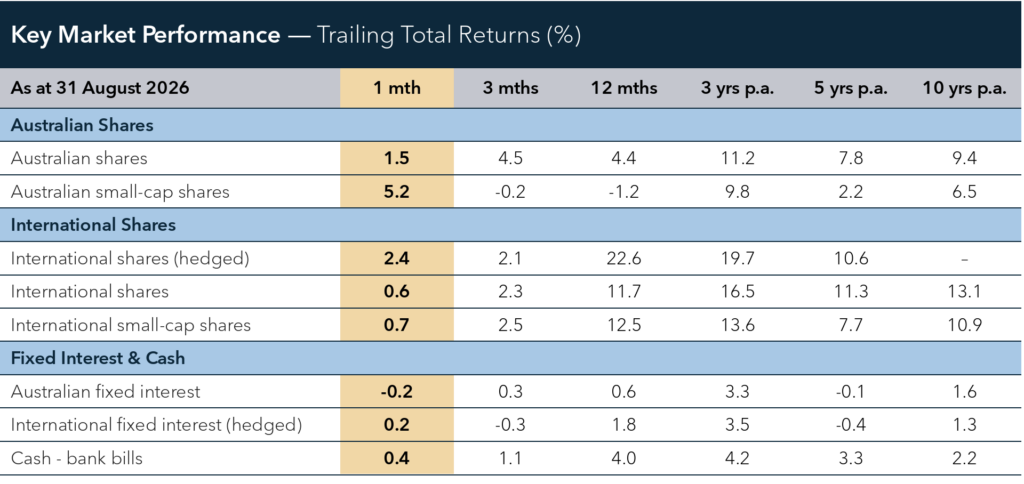
Australian shares climbed despite markets pricing in additional policy tightening from the RBA. Healthcare, materials, utilities and technology led the market, while financials and consumer discretionary companies fell, and smaller companies outperformed their larger peers. Strong inflation and firmer than expected household spending data also lifted expectations of another Reserve Bank rate rise, increasing the risk that there will be further pressure on borrowers and parts of the economy.
International shares advanced, with the stronger Australian dollar favouring hedged investments by reducing currency drag. Japan and the US led the gains, supported by strength in technology and other growth-sensitive sectors. Europe and the UK rose more modestly, with less exposure to sector leaders, while China and India slipped on growth concerns. Technology, materials and healthcare were key drivers, highlighting a broadly positive but uneven month across global markets.
Fixed interest delivered mixed results as Australian bond yields rose by more than their global counterparts. Australian government and high-quality corporate bonds eased as stronger inflation increased expectations of another Reserve Bank rate rise, lifting yields and weighing on prices. International bonds held up better due to steadier rate expectations, while higher-risk corporate bonds benefited from stronger investor confidence.
Market observations
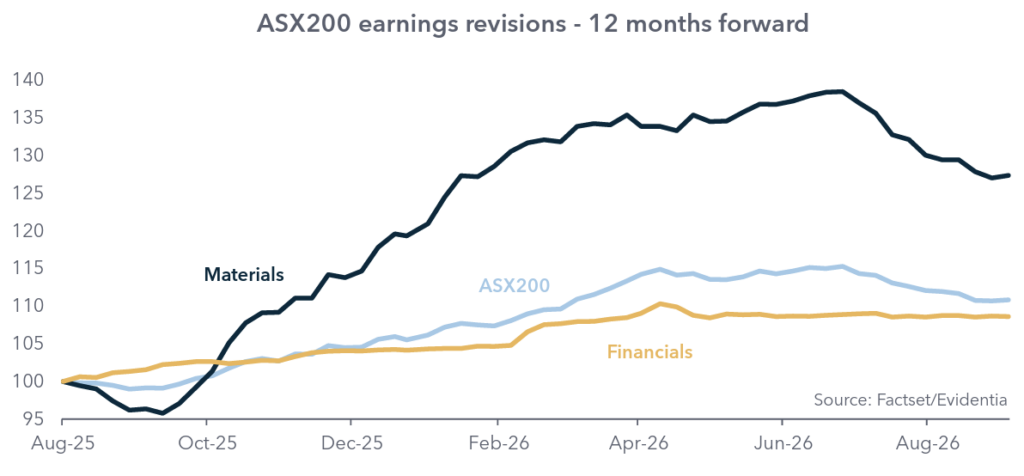
The August reporting season painted a stronger picture for corporate Australia than in recent years, although the gains were uneven. Earnings across the 200 largest companies listed on the ASX grew by around 11% over the 2026 financial year, helped heavily by resources and higher commodity prices. Outside resources, growth was much more modest. Many companies lifted profits through cost control and better margins, earning more from each dollar of sales.
The outlook for Australian shares remains more challenging. Economic growth has slowed, productivity is weak and inflation remains above the Reserve Bank’s target. Markets already expect another rate rise, which would add further pressure to household budgets, the housing market and company profits. With Australian shares also trading at relatively high valuations, future gains will increasingly depend on companies delivering stronger earnings.
Consumers are still spending but becoming more selective. Supermarkets and retail landlords have held up relatively well, while discretionary retailers face softer sales and rising wage costs. Banks are also feeling the housing slowdown through weaker mortgage demand and stronger competition for new loans. Despite this, company balance sheets remain healthy, supporting dividends, share buybacks and takeover activity.
Global shares continue to benefit from strong earnings and heavy investment in artificial intelligence. Spending on chips, data centres and networking equipment is creating demand across a broad range of industries, including semiconductors, construction, power infrastructure, critical minerals and cloud services. However, relatively high valuations mean companies will need to keep delivering strong earnings to support further gains.
Higher interest rates have also improved bond income. Australian government bonds should provide useful protection if growth slows, while currency-hedged overseas bonds now offer attractive yields. Corporate bonds are less compelling, as the extra income they offer over safer government bonds is currently limited relative to the additional risk investors take.